On this page
- 01Understanding Mobile Outdoor Advertising
- 02What is LED Van Advertising?
- 03What is Bus Branding?
- 04Cost Structure: LED Van Advertising vs Bus Branding
- 05Visibility and Audience Reach
- 06Campaign Flexibility
- 07Audience Engagement and Brand Recall
- 08Measuring ROI in Mobile Advertising
- 09Choosing the Right Format for Your Campaign
- 10Frequently Asked Questions
Outdoor advertising has evolved significantly in recent years. While traditional formats like billboards still dominate many urban landscapes, brands are increasingly turning to mobile advertising solutions that bring their message directly to the audience. Two of the most popular moving media formats today are LED van advertising and bus branding.
Both formats transform vehicles into powerful advertising platforms, but they operate differently in terms of visibility, flexibility, cost structure, and return on investment (ROI). Choosing the right format depends on campaign objectives, target locations, and the level of audience engagement a brand wants to achieve.
In this blog, we will explore the differences between LED van advertising and bus branding, focusing on their cost factors, visibility impact, and overall ROI for marketing campaigns.
Understanding Mobile Outdoor Advertising
Mobile outdoor advertising uses moving vehicles to carry brand messages across different locations throughout the day. Instead of relying on fixed hoardings, brands use mobile platforms such as vans, buses, and promotional vehicles to create visibility across multiple neighborhoods, markets, and commercial zones.
This approach allows brands to reach audiences in traffic-heavy roads, residential areas, shopping districts, and event zones, generating repeated impressions across the city.
The two widely used formats within mobile advertising are:
- LED Van Advertising
- Bus Branding
Both formats help brands reach a large audience, but they offer different advantages depending on the marketing strategy.
What is LED Van Advertising?
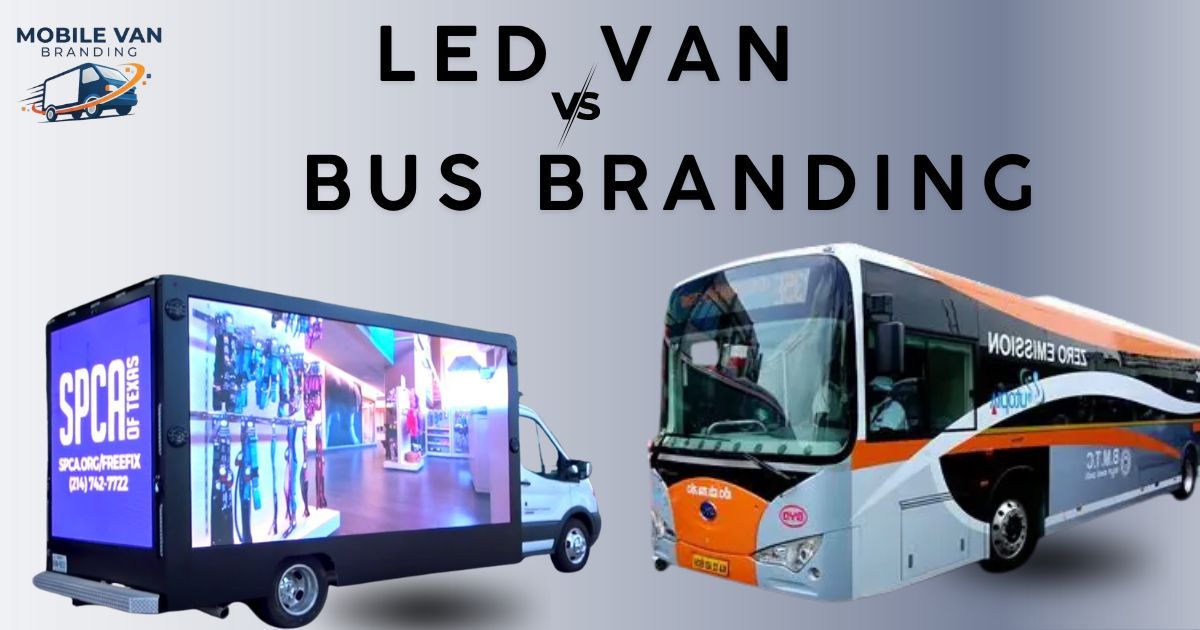
LED van advertising uses digital LED screens mounted on mobile vans to display dynamic promotional content. These vans travel through carefully selected city routes, playing video ads, brand visuals, or campaign messages throughout the day.
Unlike static advertising formats, LED vans can display moving graphics, animations, and promotional videos, making them highly attention-grabbing in crowded urban environments.
Key Features of LED Van Advertising
LED vans are designed to maximize audience engagement through digital displays. Some key features include:
- High-brightness LED screens visible during day and night
- Video and animation-based advertising content
- Mobile campaign deployment across strategic routes
- Real-time promotional messaging for events and launches
- Flexible route planning across targeted locations
These vans often travel through high traffic roads, commercial districts, IT corridors, event venues, and market areas, ensuring strong visibility throughout the campaign.
What is Bus Branding?
Bus branding is a traditional yet highly effective form of mobile advertising. In this format, commercial buses are wrapped with large vinyl advertisements on the exterior surfaces of the vehicle.
The branding usually covers areas such as:
- Full side panels
- Rear panels
- Partial body wraps
As buses operate on fixed public transport routes, they continuously move across multiple parts of the city, creating repeated brand impressions among commuters, pedestrians, and drivers.
Key Features of Bus Branding
Bus branding provides wide exposure through large format vehicle graphics. Its main characteristics include:
- Large advertising surfaces for strong brand visibility
- Long operating hours throughout the day
- High exposure on busy public transport routes
- Continuous impressions across multiple neighborhoods
Since buses are part of the public transportation system, they naturally travel through dense traffic zones and populated areas, ensuring consistent brand exposure.
Cost Structure: LED Van Advertising vs Bus Branding
One of the biggest considerations for marketers when choosing an advertising format is the cost involved in campaign deployment.
Cost Factors in LED Van Advertising
LED van advertising costs depend on several elements, including:
- LED screen size and quality
- Campaign duration
- Route planning and deployment hours
- Video content creation
- Fuel and operational logistics
Since LED vans involve digital screens, technical setup, and operational management, the cost per vehicle can be higher compared to static vehicle branding formats.
However, the dynamic nature of LED screens often leads to higher engagement levels, especially for product launches, promotional events, or awareness campaigns.
Cost Factors in Bus Branding
Bus branding costs are generally based on:
- Type of bus (city bus or intercity bus)
- Size of branding area
- Vinyl printing and installation costs
- Campaign duration (typically weeks or months)
Bus branding is often considered more cost effective for long term campaigns, as the advertisement remains displayed for extended periods with minimal operational expenses after installation.
Visibility and Audience Reach
Both LED van advertising and bus branding offer high visibility, but they achieve it through different mechanisms.
LED Van Visibility
LED vans rely on dynamic visual content to capture attention. Bright screens, moving visuals, and animated messages naturally stand out in crowded city environments.
This format is especially effective in:
- Night-time promotional campaigns
- Event activations
- Product launch promotions
- Political awareness campaigns
- Government awareness drives
Because LED vans can pause at high-footfall locations, they create strong audience engagement and interaction.
Bus Branding Visibility
Bus branding depends on large format static graphics that remain visible as the vehicle moves across the city.
Since buses follow fixed routes and operate throughout the day, they create continuous exposure among daily commuters and pedestrians.
Bus branding works particularly well for:
- Long-term brand awareness campaigns
- FMCG product promotions
- Retail brand visibility
- Telecom and financial services marketing
The large size of bus advertisements ensures that the message is visible even from a distance.
Campaign Flexibility
Flexibility is another important factor when comparing these two advertising formats.
LED Van Campaign Flexibility
LED van advertising offers high flexibility because routes can be planned and adjusted according to campaign goals.
Brands can choose to target:
- Specific residential areas
- Shopping districts
- Corporate zones
- Event venues
- Educational institutions
Campaign duration can also vary from single day activations to multi week campaigns, depending on the promotional strategy.
Bus Branding Campaign Flexibility
Bus branding offers less route flexibility because buses operate on predefined transport routes. However, this consistency also ensures regular exposure across the same high-density areas.
This makes bus branding ideal for brand recall campaigns where repeated impressions are essential.
Audience Engagement and Brand Recall
Audience engagement plays a major role in determining the success of an outdoor advertising campaign.
Engagement in LED Van Advertising
LED vans create higher engagement because they display motion based content. Video advertisements, animated graphics, and promotional messages attract attention more effectively than static visuals.
The ability to display multiple ads in rotation also allows brands to showcase different campaign messages during a single deployment.
Engagement in Bus Branding
Bus branding focuses on repeated visual exposure rather than interactive engagement.
As buses move through busy roads daily, audiences see the advertisement multiple times, which helps strengthen brand recall over time.
This repeated visibility plays a major role in long-term marketing campaigns.
Measuring ROI in Mobile Advertising
Return on investment (ROI) in outdoor advertising is often measured through brand visibility, audience reach, and campaign impact.
ROI from LED Van Advertising
LED vans typically generate strong ROI when used for:
- Product launches
- Event promotions
- Political campaigns
- Government awareness programs
- Local market activations
Their ability to attract attention and deliver dynamic messaging often leads to higher immediate engagement levels.
ROI from Bus Branding
Bus branding delivers ROI through consistent long-term exposure.
Since buses operate daily across the city, brands benefit from continuous impressions across different neighborhoods. This sustained visibility strengthens brand familiarity among consumers.
For businesses seeking steady exposure rather than short-term impact, bus branding can be a highly efficient advertising solution.
Choosing the Right Format for Your Campaign
The decision between LED van advertising and bus branding ultimately depends on the campaign objective.
LED van advertising is ideal for:
- Promotional events
- Product launches
- Political and government awareness campaigns
- Short-term high-impact promotions
Bus branding works best for:
- Long-term brand awareness
- City-wide brand visibility
- FMCG promotions
- Retail brand marketing
By aligning the advertising format with campaign goals, brands can maximize both visibility and return on investment.
Frequently Asked Questions
1. Which format offers better ROI in outdoor advertising?
LED vans deliver higher engagement for short-term campaigns, while bus branding offers better ROI for sustained visibility over time.
2. How flexible is LED van advertising compared to bus branding?
LED vans offer route and timing flexibility, whereas bus branding follows fixed transport routes with consistent exposure.
3. What industries benefit most from LED van advertising?
Political campaigns, government awareness programs, product launches, and event promotions benefit the most.
4. What industries should use bus branding?
FMCG, retail, telecom, and financial services benefit from bus branding due to repeated exposure and mass reach.
5. How is ROI measured in mobile outdoor advertising?
ROI is measured through impressions, visibility, engagement levels, and brand recall across targeted locations.
Both LED van advertising and bus branding offer powerful ways to deliver brand visibility across busy urban environments. While LED vans attract attention through dynamic digital displays and flexible route planning, bus branding provides consistent exposure through large vehicle wraps moving across fixed public transport routes. Each format serves different campaign objectives depending on whether a brand wants short-term promotional impact or long-term city-wide visibility.
When choosing between these two advertising formats, marketers should consider factors such as campaign duration, target audience locations, and overall marketing goals. LED van advertising works well for event promotions, product launches, and high engagement campaigns, while bus branding is ideal for sustained brand awareness and repeated impressions across multiple neighborhoods. By selecting the right format, brands can maximize both reach and return on investment in their outdoor advertising campaigns.